Thursday, April 12, 2012

The Osa Conundrum

Nearly seven years to the day since I first set foot outside of the US, I returned the place that started it all, the Osa Peninsula of Costa Rica. Only this time I wasn’t a 19-year-old, more concerned with getting a tan than learning the people. I was a grad student, studying conservation policy, in one of Latin America’s most well preserved natural territories. The following is a blog I wrote for the Natural Resources Defense Council... a small portrait of the state of the Osa.. a territory in limbo, caught between conservation and development. 


The Osa Peninsula is perhaps one of the best examples of the original Costa Rica. It lies in the southwest corner of the country as a remote and relatively untouched territory. Its coasts are marked by unfettered jungle which stretches out to the white sand beaches, or in some areas the region is dotted with small-scale eco-lodges. When looking at the rest of Costa Rica’s coastal regions, like that of Guanacaste, which is now home to several major resorts and inundated with millions of tourists annually, it is hard not to ask the question, how did the Osa Peninsula remain so untouched?


The answer is a complex combination of conservation initiatives of the 1970’s, development models which emphasize small-scale tourism, and of course the natural infrastructure barriers which make much of the Osa Peninsula difficult to access. Furthermore, the creation of Corcovado Park in 1975 assured that the majority of the Peninsula would be off-limits to large-scale tourist development. Though this conservation move by the Costa Rican government was not without repercussions (i.e. the riots of 1985 amongst gold miners who demanded compensation for the land which had been taken from them when Corcovado was created), it did ultimately ensure that 425 kilometers were protected by national decree.


But what will become of the Osa if the pending plans for an international airport in the region are carried out in the coming years? A brief week of fieldwork on the Peninsula shed light on how these historical conservation policies are currently affecting the region as a whole both for better and for worse, and what a new airport might mean for the region’s development. 


Costa Rica has become a poster child for environmental policy and sustainable development. The international airport in the nation’s capital reads, “Welcome to to the world’s happiest country.” But it is on the Osa where this sentiment seems to remain true to its roots. Where development has been kept to a smaller scale, eco-lodges and sustainable tourism have been able to flourish. The Osa Conservation group, an NGO founded in 2003, is one concrete example of this success. Here, reforestation projects are combined with sea turtle monitoring initiatives, student internship and volunteer opportunities and future work with carbon sequestration models to offset university emissions in the US are underway. 

Thus far Osa Conservation has been able to restore 100 acres of abandoned teak and pachote plantations of the privately owned Cerro Osa property planting more than 19,000 native tree species. Pictured here, Maxwell Villalabas, a forest engineer for Osa Conservation, points to a nursery of 12,000 new trees of various species which will be planted before the year is out. The nursery was funded two years ago by NRDC as part of an initiative to strengthen the Corcovado-Matapalo biological corridor. “This area is incredibly important because it is part of the biological corridor between Corcovado National Park  and the Cabo Matapalo territory, which is a crucial corridor for several keystone species,” says Villalabas. “NRDC provided the funds for this project and now we have at least ten years worth of work until the project is complete.” 

But even experts like Villalabas find it hard to predict how a mega-project like the international airport will effect the Osa. The construction plans are vague and in the land of “mañana” it is unclear whether the project will arrive in the foreseeable future. But it is hard to ignore how accessibility has shaped the development of coastal regions to the Osa’s North. Jacó, a popular beach spot is more comparable to the Jersey Shore of the US than a tropical paradise of Central America. Water once available to local communities is used up by immaculate golf courses and prostitution is as common as gallo pinto. One can only hope that developers look at this type of development as a warning sign for the Osa rather than an example to be emulated for economic growth. 

Thursday, February 16, 2012

Beware the Lack of Culture Shock-Shock


Culture Shock is defined as the anxiety, feelings of frustration, alienation and anger that may occur when a person is placed in a new culture. Wise Wikipedia goes on to describe four states of culture shock: honeymoon, negotiation, adjustment, and master. But my darling Wiki, whom I rely on for all things truth (sorry I'm not sorry), you have failed me, because what I experienced when moving to Costa Rica was a jarring, frustrating, nauseating LACK of culture shock-shock. 

Nearly two months since I arrived in Costa Rica and THIS is my first blog? Telling indeed, for it has been a very very... very strange adjustment period. The first two weeks were marked by Mal Pais, a bus full of hippies, and getting to know old friends a bit better. I thought the strange feeling of uneasiness was brought on by being in Mal Pais without Aer or the original characters that had made that place so memorable the first time around and decided my mistake had been going to the same place twice. A slowly unraveling pit in my stomach reminded me that I had chosen to come to Costa Rica for a third round and dreaded that I would spend the year feeling the same uneasiness I had in Mal Pais. Decidedly, I needed a change of scenery STAT. 

So I found myself a mini adventure with the Dutch Hippies of Bennie Bus. A life-loving couple with big dreams and small purses, they decided to make their travel fantasies possible by gutting out a Craig’s list bought bus and mobile hosteled their way down the coasts of Latin America. One hammock at a time, I took comfort in new people, new places, the slow passing of time and the journal musings which gradually proved that 6 months in the states hadn’t left me completely brain dead. But then I arrived in Colon and it was weeks of confusion that rolled over me in waves as I impatiently waited to feel exhilarated, to feel shock, to feel the awe of a new country. Weeks of unending emotions which never let me put my finger on them. I would pin down how I felt only to do a complete 180 two hours later. I would revel to Steve when I managed to have the same emotion for more four hours at a time, only to launch into a tirade minutes later about how dissatisfied I was.
For this shock, I brought in the big guns, not one, not two, but three, wise knowledge meese who advised me accordingly. 

Steve: "You have to be patient, and you also have to stop comparing this to your last travel experience."(Ten moose points). 

Em: "You're not stringing hammocks in the jungle because you're down there to be a grad student, you have to be in civilization for that honey" (Double Accurate).

Bech: “You don’t feel culture shock because whether you want to admit it or not... this is our home. We’re just more comfortable in this part of the world.” (Sigh. Triple Truth). 
I am not hopping borders every two weeks, I am not frolicking through ancient indigenous ruins, or taking in the glaciers of patagonia. I’m not bathing out of buckets or battling 104 fevers while riding 17 hour night buses. I live here. I learn here. I play here. I have a routine, and friends, and a family. I have a soccer team, a cafe, and a spanish tutor. In reality, I have a life. And this idea of permanency in a place with so few challenges has been my greatest shock... it is the lack of culture shock-shock, and it has taken me two months to acclimate. 


But in changing my expectations... tweaking I should say, I am slowly but surely starting to appreciate the intricate details that comprise this life: a school of international students dripping with life experience that make mine look like the ultimate silver spoon; endless amounts of opportunity to balance work and play via salsa lessons, volleyball tournaments, and middle eastern weddings; my family, Momma J, Uncle Mario, and the parade of cousins and niñetas that find their way to my door wanting nothing more than un ratito para hablar y mirar. And despite my contempt for technology this life is defined by connection. I am connected at all times to those I miss the most, and it seems that in some ways I am redefining my own advice to myself. “The only way to balance life with travel is by tattooing a compass on your wrist.” Truth. But for now I am learning that sometimes balancing life with travel means redefining your idea of life and your definition of travel in the first place. 


So here’s to a year of defining, redefining, and “settling down,” a year of embracing the intricacies of non-nomadism and being epically grateful that my longest stint in one place is in a country who’s name just happens to mean "The Rich Coast."  


Special Thanks: Stephen Vincent Valenta for putting up with my crazy on a daily basis with the most love and support a girl could hope for, Aeriel Kaylee Emig, for patiently working through three very stressful days with me and putting things in perspective 24-7 with journals and crayons, and Emily Intermonte Dally my oldest and longest love, sometimes I skype walk/talk through your apt makes everything better.  Love you all epically...8/2/33 days! <3 

Friday, June 24, 2011

Lessons in Navigation


There is more than one type of poverty and there is more than one type of tourism. The only way to navigate them both is by tattooing a compass on your wrist...


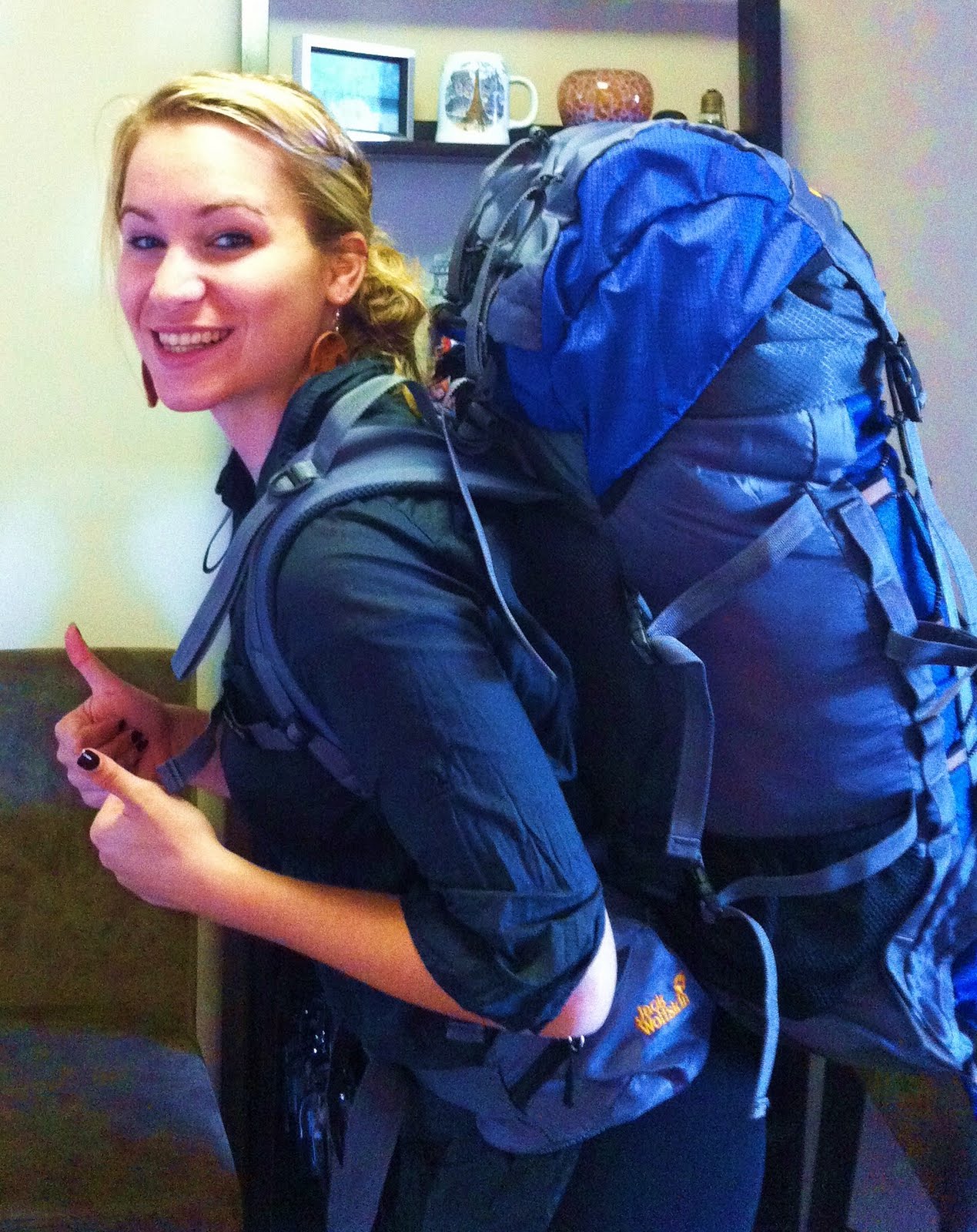
Yesterday marked eight months since the lovely Ms. Emig and I hopped on a one-way flight to Panama. Knowing very little about what the Latin American world held for us, we landed ourselves smack dab in the middle of rainy season with neither umbrellas nor rain jackets. We never looked back because being soaked and freezing was still far more appetizing than the lives we left behind in the global North. Eight months later, dry, warm, and cozy in my West New York abode, I can say I am happy to be home, but not a day goes by that I don't recall that first day in Panama or that last day in Egypt, and frequent daily texts to Aer rarely lack an inside joke about the 240 days in between. And so this photo blog serves as my futile attempt to sum up the most influential eight months of my life, the road through Latin America, with nothing more than a backpack and a sister. 


Panama

Lessons: Don't forget your umbrella, never fear the slow passing of time (it will pick up when you least expect it) and remember that the hospitality of those who have nothing is unparalleled. 


Klaus: Peace Corps volunteer, Ngobe Pro, and the best host we had in all of our eight months with little more than lemon grass oatmeal, a GREAT hammock, and of course some chicha fuerte form used gasoline containers. 


Costa Rica

Lessons: Let the road guide you because Pura Vida never dies. 


We came upon this place, Mal Pais, because two Americans had room in their jeep...ten days later we stayed ten days longer than planned. Pura Vida. 

Nicaragua

Lessons: The Frightening realization of my own ignorance as I get my first glimpse into how American Foreign Policy in Latin America has tainted an entire culture. 


Gollita: Our Nicaraguan Grandma never learned to read because of the halt in education brought on by the Sandinista War (funded by the US government). 


Honduras

Lessons: FEAR and CONFUSION and how to survive in the middle of a mining community with little more than chickens, cow hoofs, fire, and questions. 


Environmental Policy at its finest in Honduras


Life Lesson Number 12: Jehova's Witnesses are EVERYWHERE. Above, Aer brushes up on her doomsday theory while reading a pamphlet that a Jehova gave us in Algateca, Honduars (population 450) Seriously?


Guatemala

Lessons: The necessity and power of language and a few strong women are indisputable. 


The women of Mercado Global's Microfinance team in Comalapa, Guatemala. 


Hermanas getting stronger with each passing country. 

Ecuador

Lessons: Sometimes a little Quechua Root is all you need to put life in perspective...that and three weeks of digging cesspools for underprivileged children of course. 


Nixon: Our Quechua guide through the Ecuadorian Amazon would lead us in our first experience with the infamous Ayawaska. 


Puerto el Morro: Our first South American volunteer project, teaching English and building a new school. 

Peru

Lessons: There is more than one type of poverty and there is more than one type of tourism. The only way to navigate them both is by tattooing a compass on your wrist...

The people of Pisco, Peru are living in poverty because they lost everything they knew in a devastating earthquake in 2007. Maria looks on as we begin to rebuild her home. 


Bech and I after mounting Machu Piccu...hands down the most powerful touristic experience of our journey. 


Roughly 12 American dollars later in an unmarked room above a Peruvian pharmacy...I'll never get lost again.

Chile

Lessons:  When Aer and I go too long traveling without a project we tend to make our own challenges...like running marathons, geyser hopping on the Bolivian border, fasting for ten days, and camping in the Antarctic Straights of Magellan...in the middle of Chilean winter...you know... normal stuff. 


El Mitad Maraton en Santiago con 25, 000 de nuestra amigos. 


My 5 AM commentary while perched above pure magma. 


Aer picks out three bushels of lemons (which we will later drunkenly juice by hand) as I search for maple syrup. The following day we will begin the MASTER CLEANSE, a ten-day fast using only a lemon juice/maple syrup concoction. 


The Bottom of The World. 


Argentina

Lessons: The art of saying goodbye. There is no easy way to do it. Closing a chapter is heartbrakingly hard. Writing helps, Malbec helps, and having a sister helps but no one can do it for you. You have to get in the cab, you have to drive away, you have to cry. You have to know that when you arrive at the next destination you will be confused, lonely, and most likely jet-lagged but you will embrace it and like the last chapter it will ultimately shape who you are in some way. 

Egypt

Lesson: People fear most, that which they do not know....


The Men of Edfu Market


My Last Sunrise on the Red Sea

Thursday, June 2, 2011

Tie-Dye Tranquility


The strobe lights stopped their frantic dance and for a moment came to rest on a silent blue hue which put the rock and roll stage into a tranquil trance. Tray Anastasio, as if feeling the pulse of the 10,000 people screaming his name simply stood still eyes closed, smiling, absorbing, breathing.


I take a second to do the same. To my left is Alissa, Brent’s little sister, I had watched her grow up from age seven. She now stands a beautiful confident woman, swaying to the soft rhythm of her own world. In front of me, Jaime, naturally wonderful and bubbly as can be, bouncing happily to the beat looking back intermittently to make sure we are doing the same. She is perhaps the most positive person I’ve ever known and her permanent smile tonight is not surprising.


And to my right, Em, best friends since age nine, she jabs my shoulder and points to her watch, “Pandz, 4:00! THAT is my new favorite.” I look at her watch and then realize which 4:00 she is talking about. Behind us to the right is a fabulous balding hippie covered in gray wisps and tie-dye, his bandana is secured by a bushel of glow sticks, and like Alissa the man is in a world of his own, frantically swaying with his eyes closed connected to everything and nothing at the same time.


Then Brent, relentlessly throwing his hands in the air or downward toward his air guitar laughing as if overcome by some kind of mad happiness. I should add that he also does this when riding rollercoasters, the purest form of unencumbered bliss. Over the years, I have come to learn that Brent only laughs manically when he’s truly happy and there’s just nothing like it.


Suddenly, the blue light has lifted from the stage, and chaos ensues as Tray begins his one-man trampoline show while still managing to pull off the most impressive guitar rifts I’ve ever heard. But I can’t pull myself out of the trance that that blue stage momentarily put me in. I look at the four of them, people I have grown with and loved for 15 years, people who, like Aer and our journey through Latin America, have inarguable made me who I am today.  I realized all at once, how much home holds. I may not have been surrounded by Amazon jungle or Andes mountains, but I felt equally lucky to be home, surrounded by four of the best people I’ve ever known and the tie-dye beats of Phish.

Thursday, May 26, 2011

No Dark Sarcasm in the Classroom


It never ceases to amaze me how easily music travels. Here, in the middle of Sinai, Egypt, Muhammad and I cruise to Dahab in his  ’95 blue jeep Cherokee whom I lovingly call “Z” (note this is because I cannot pronounce her real name but I know it begins with a Z and ends with an A). 

“I love Pink Floyd,” he yells over the wind and the music and sings without hesitation, “All in all you’re just a brick in the wall.” He knows each word by heart.

We had an hour drive through the valleys of Park Nabq ahead of us and I took the opportunity to pick his brain about all of the things that my newly found knowledge of ancient Egypt had left wanting. For instance… what happened AFTER Ramses II? What had my own tour guided classrooms along the Nile left out?

Muhammad started with King Farouk, the one who ruled Egypt as the British had stuck their hands in its bountiful candy jar. WWII had arrived in Africa then, but Farouk was more or less still popular. The British however, were not. According to Muhammad, the Egyptian people, and their endless threats and hatred toward the Brits were ultimately what sent the occupation running.

After Farouk, came Nasser. Under him, Egypt lost the Sinai Peninsula to Israel which was devastating to the people.

“Why did Israel want Sanai in the first place?” I asked.
“Because Moses walked the deserts there for 40 years,” he responded as if that were a natural and obvious reason to wage war. 

We flew over a sand dune, and Muhammad’s face which had gone slack at the thought of Israel once again beamed with excitement of a five-year-old driving a toy car.

Nasser took full responsibility for the loss and announced his resignation. Egypt, however, accepted his apology and urged him to stay to lead them to victory and regain the sacred Sinai. But, he was assassinated via poisoned dinner before he could do so.

After Nasser came Sadat who was somewhat more successful than his unfortunate predecessor. Sadat threw himself and his resources into reclaiming Sinai. But by this time Israel had built up a powerful defense, a massive damn on the Gulf of Suez blocked Egyptian access to Sinai. One day, after many days of racking his brain with how to bring down Israel’s defense, Sadat stood on the West Coast of the Suez looking out at the lost Sinai as he often did. When nature called he did not hesitate to pee in the sand cursing Israel as his stream slowly washed the nearby sand away. And in the purest of light bulb moments he had solved all of Egypt’s problems. He rushed to the university and the government and gathered a team of expert engineers. “We will wash the sand away!” he exclaimed. Sure enough, Egypt was able to strategically pour water over the sandy damn, and break Israel’s main defense.

And so, on June 5, 1967 the infamous Six-Day War began. Egypt sent 7,000 men over the Suez and lost 3,800. But in 24 minutes the troops had successfully cleared the way for 200,000 more Egyptian soldiers who were able to cross the Suez quickly overwhelming baffled Israeli's,  taking back what they had lost. Sinai was Egyptian territory once more.

“If you ask anyone today, the people will tell you, “We love Sadat, we love him the most of any ruler”” Muhammad says with a trace of sadness in his voice.

Sadat was killed by Mubarak, or so, many Egyptians think. It was never actually proved. Today two leaders of the Muslim Brotherhood are blamed for the crime and have sat rotting in jail since Mubarak took power after Sadat’s death. So,  for 35 years, Mubarak ruled with his oppressive regime, squandering money left and right from his country and his people.

Until, of course, on January 28th, 2011, the people rebelled in Tiran Square. 840 people died for the cause but soon after, Mubarak resigned. Today nearly five months later, Egypt still faces huge obstacles and they don’t end in the capital where unrest is publicized most.

Here in Sharm-el-Sheikh, the heart of the Sinai Peninsula, Mubarak resides, lying in a hospital bed, killing the livelihoods of local Egyptians just by his presence.

“I don’t understand Muhammad, if he’s hauled up in a hospital, what harm can he do?” I ask.
“Habibi, while he’s here, the people will not come.”

Tourism is the blood of Egypt’s economy, more than 30 percent. And it is true, that it has taken the hardest hit from the revolution, but in Sharm, a place which relies far more than 30 percent on tourism, foreigners refuse to set foot while Mubarak is anywhere near.

Muhammad is the leader of the revolution here in Sharm. He seems to be friends with everyone and thus capable of rallying each clan of Bedouin Sheiks’ and all major heads of resort tourism. Under his guidance, a silent protest, 2,000 strong,  will ensue tomorrow outside of the hospital where Mubarak resides.


We are in Dahab now. The story of Egypt’s rocky recent history has outlasted Z, and we now sit on a dock watching the sunset over the Red Sea. Taking another sip of Bedouin tea, Muhammad’s eyes begin to water. “It’s not fair.  We worked so hard to free our country, and now our home is under the same oppression. He has to leave.”


This sea-side classroom is as real as the blue water that envelopes my dangling feet, and there’s not a speck of sarcasm in his voice as he continues to speak of the ongoing revolution.  Sharm-el-Sheikh, the place I had thought was, “The City of Peace”, is under just as much torment as the rest of Egypt. Only here, the people are not pinned against each other in a baseless religious battle. Here, they are still rooted against one man, who’s sickly presence grows like a cancer on the city. 

Wednesday, May 25, 2011

Death in the Desert: A Story that Demanded Telling


Today the sharp-toothed smile rarely leaves his face. A 38-year-old ball of energy, he begins the day as the sun rises over his self-built desert abode, tending his garden, his camels, and his goats.

“I love every grain of sand” he says as he lets a hand-full flow through his fingers. “Egypt is my country and Sinai is my heart, how could I ever leave it? You know sometimes I’m afraid to sleep because I think I will miss something!”

He stands about 5’8”, muscular and tan. His speckled gray stubble and a few laughing wrinkles betray his otherwise youthful physic. Today he looks more like Gandhi than Ahmed; a delicate thin skirt of Bedouin patterns and colors reaches his ankles topped by a long sleeved white cotton tunic and his trademark bare feet. “I would fall over in shoes!” he once told me. He is the image of a free spirit. Only upon digging just below the surface did I learn the trials of his past. 

I imagine him much the same twenty years ago, though I know the head that he keeps bald now was rampant with a reckless black mien, but those laughing lines surely must have come with him out of the womb. He was a guide then too, a safari diver with a speed boat parked on the Island of Tiran just between Egypt and Saudi. Tiran was a staple then, the Mecca of the diving world and there he worked, plunging into the crystal waters eight months out of the year. As the God’s of ancient Egypt held the key to eternal life dangling for the pharos passing into the next realm, he held the key to the water, to the bright corals beneath the surface of the red sea. Each morning he would drive his boat without caution or pace right up on to the shores of Sinai to pick up his incoming tourists.

 “I loved the speed, I would drive onto the sand, nobody was watching, the coast was mine in those days.”

It was in this way that he met Yana.

“Her skin was so pale and beautiful it blended right into the sand. Even her voice as she screamed at me, “You idiot you almost killed me!” was beautiful,” he says laughing. “I loved her instantly.

Two weeks later they were married.

They were eighteen-years-old, she a young Russian beauty on vacation and he a Muslim Egyptian addicted to his earth.

“My friends looked at me every day and they would say, “Ahmed, today you look even happier than yesterday, but tomorrow we know for sure you will somehow look happier than today. It is Yana, we know.””

They lived together on that small island between Egypt and Saudi for two years. In the cradle of the Red Sea, they grew together entwined and safe in the world they had created for one another. Away from the politics and rivalries of Cairo, they ignored the world that would have torn them apart because of their differences.

“One day out of nowhere, I started getting calls on my mobile,” he says. “Ten, twenty, thirty calls at once. It was Yana’s mother. She worked for the Russian government in the province of Karelia, something like what you call…The Central Intelligence. She wanted Yana home. She screamed, “Ahmed, you’ve done something to her, you’ve kidnapped her, she was supposed to come home after two weeks. What have you done to her?””

“I didn’t understand” he tells me, “I told her, what are you talking about, we are married, we live together, we’re in love, I turned to Yana, “Yana what have you told your family about me?””

“Only normal things darling,” Yana says. “Please believe me. But my mother, she is crazy with missing me. She makes things up in her head to explain my being here so long. She hates you because I have stayed with you. I have tried to reason with her for two years. I tell her to come here and see our life together and meet you, my husband! But she won’t see it no matter what I say.”

Soon after, Yana’s mother arrived on the Sinai Peninsula with every conceivable government documentation she could get hold of.

“I didn’t understand the documents,” Ahmed tells me, “but in the end they didn’t matter because Yana was in Egypt and legally married. No Russian document could change that and her mother knew it.”

In the end she pleaded with the couple, offering them their own palatial house in Russia with servants and endless amounts of money.

“She says to me, Ahmed, you won’t need anything, you want water, you push a button and servants will bring it to you, you two will have every luxury, just come to Russia.”

“But that’s not me” Ahmed cried. “My work is my happiness; my heart is this country, the sand and the sea. Take me away from Egypt and I am a fish out of water, this land is my air, I will die without it.”

And so Yana’s mother left, defeated and another year passed before they received another phone call. It was a Wednesday morning and the still happily married pair were sound asleep.

Yana’s mother was extremly ill, the doctors gave her one month and Yana had to go say goodbye. “Come with me darling,” she pleaded, “I need you there.”

“Of course, I just have to finish certifying this last group of divers and I will be there, you know this.”

So she went.

Two weeks passed with no word from Yana. Terrified, Ahmed flew to Russia, leaving everything to find his wife. He was arrested and detained in the Karelia airport, and by a mysterious governmental decree he was deported.

“I called and called, every number I could think of, Yana’s phone was disconnected and I couldn’t get within a thousand miles of Russian boarders without being arrested.”

The distraught young Egyptian received another phone call three weeks later. On the opposite end was a soft-spoken Russian woman…her English came in short bursts as she spoke quickly in a nearly inaudible whisper. 

It was Yana’s childhood nanny.

“I knew it had to be the nanny” Ahmed says, “Yana talked about her more than she talked about her mother, it was she who raised her, she was more like a mother to Yana than anyone else.”

“Yana is here,” the nanny said. “Her mother has her locked up in a room, with no communication.”

“Her mother is alive?” he asked.

“She was never ill Ahmed.”

And all at once, a door opened, and Ahmed could hear angry voices on the other end, the phone clicked off leaving him with nothing but a dial tone.

The desert stars grow brighter as the fire ambers begin to burn out. We are on a cliff in park Nabq, the moon has not yet risen so each constellation is clearly visible interrupted only by the occasional dying ball of flame silently streaking across the black night. Lights are visible in the distance that I hadn’t noticed when Ahmed began his tale. He points to the distant glow that has caught my gaze.

“That is Tiran Island, and just beyond it the west bank of Saudi Arabia. That’s where I met my Yana.”

Beyond his finger the silhouette of a camel meanders its way though the nearby dunes, and all is silent save for its laborious footsteps through the sand.

“I was broken…completely helpless” Ahmed continued. “I couldn’t get into Russia, I couldn’t call her, I didn’t have any high ranking government friends that could help me. I had nothing. Another two months passed before the nanny called me again. Her voice was muffled as if she was speaking from a closet.”

“Yana has stopped speaking and she refuses food. They’ve moved her to the hospital…to inject the nutrients,” said the nanny.

“I pleaded with her to find a way to let me talk to Yana; if she could just hear my voice…I thought I could fix it. I was able to talk to her just three times through the secret phone calls from the nanny. I pleaded with her to eat, I told her I’d find a way for us to be together. But she was broken, just like me, and she knew these were only words. Her mother was blind, and refused to see what she was doing to her daughter.”

He fell silent.

“My Yana layed in the hospital like that for two years, broken, refusing words and food…and then, she died.”

Ahmed pokes at the charred wood as his eyes glaze over. Like a faithful Muslim; he looks out toward the pitch black sea and says, “It was God’s will I suppose.”

Monday, May 23, 2011

Charming Sharm: The City of Peace


Sharm-el-Sheikh, meaning "Bay of the King" is a desert oasis on the Sinai Peninsula of Eastern Egypt. It has often been referred to as "The paradise of Egypt" or my personal favorite, "The City of Peace" for the numerous peace conferences that have been held here over the years. From the shore I can see the lights of Saudi Arabia, and that is one of the few reminders of my geographical place in the middle-eastern world. 

Amidst this Utopia, where the endless sand stretches straight to the crystal coast of the red sea, it is easy to become lost beneath the sun swayed into tranquility by an ever flowing light ocean breeze. I however was blessed with the meeting of Muhammad my first day here, a scuba instructor turned friend who patiently opened up the real Sharm to me, via local Bedouin friends, Egyptian barbeques, and desert treks to places unknown even to locals. But first, he showed me the world beneath the surface of the Red Sea and that has made all the difference.


SCUBA- Self Contained Underwater Breathing Apparatus…..ok, so you learn some acronyms, strap on an air tank and jump in the ocean, ya?

No. First there is the fact that that the air tank is attached to a complicated vest of gages, breathing apparatuses, pressure valves, and emergency pulls, plus about nine different buckles just for shits and giggles. But before you get anywhere near THE VEST, you must take knowledge review quizzes, followed by a 40 question exam, followed by a 50 question final. There are gizmo’s and charts that you must learn in order to calculate just how much nitrogen you’re holding in your body after each dive (because the air tanks are comprised of 79 percent nitrogen, your body absorbs a shit ton of it beneath the waves). Based on those calculations you can determine just how long you must stay out of the water between dives, how deep you can go on dives two and three, and how long you can stay down there before your body hits what's called "decompression limit". Tricky… and kind of important if you don’t feel like dying from nitrogen bubbles in your blood…

BUT, then you get in the water. Strapped up, tanked up, and jazzed up, you take that first sip of air, and realize that you are breathing under water. By the end of day one I was 40 feet down and frolicking among the neon corals of the red sea, by day two I was 60 feet down mastering the art of underwater boyancy, and by day three I was swimming with sting rays and napoleon fish 70 feet deep.

 A week later I’m hooked on the Egypt that I have discovered outside of Cairo and Alexandria. This is a place where locals want you to know their land and their people because they would die for each grain of sand. This is a place where the biggest concern is what flavor Shisha to smoke tonight and how much sugar to put in your Bedouin tea. And it is a place where churches and mosques are built within 50 feet of each other, because the people of the desert seem to understand that there’s just one life, why waste it hating each other when you could be scuba diving?